
Dx7 · Available now
Repeated dialysis care needs a connected record.
Dx7 organizes the recurring work surrounding dialysis care, Shifts, Lab Days and Reports, around the patients, nurses, Nephrologists, laboratory information and clinic responsibilities involved in care.
It is SantéXA’s first working product and the operating environment from which the broader platform is being built.
Shifts
Run today’s shift.
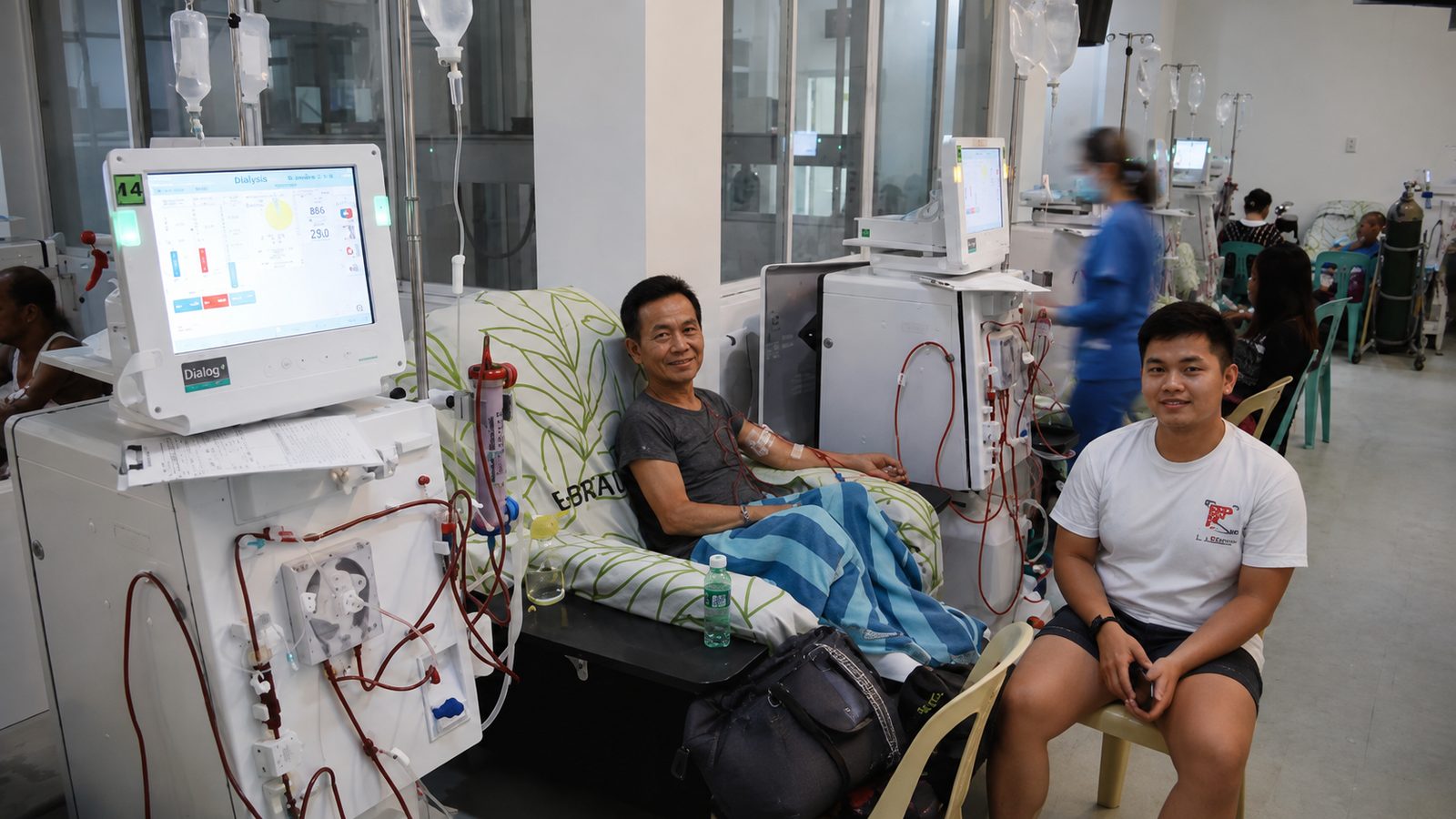
A Head Nurse runs the day’s shift: assigning each patient to a shift and a station, and opening that patient’s released laboratory results from the same view.
The shift is run for the day it is worked, so the assignment on screen is the assignment in the unit.
- View the patients assigned to today’s shift
- Assign a patient to a shift
- Change a patient’s assigned shift
- Assign or update the patient’s station
- Open released laboratory results from the shift view
Lab Days
Organize every laboratory collection.

Lab Days organizes the recurring collection and result cycle around the dialysis schedule.
Clinic teams can prepare the patients due for collection, follow the laboratory handoff, identify missing work and receive released laboratory results inside the workflow used before treatment.
- See which patients are due for collection
- Prepare the clinic’s scheduled laboratory work
- Follow the laboratory handoff
- Identify missing or unresolved work
- Receive released laboratory results
- Keep the collection cycle connected to the patient and clinic
Reports
See the patient’s results over time.
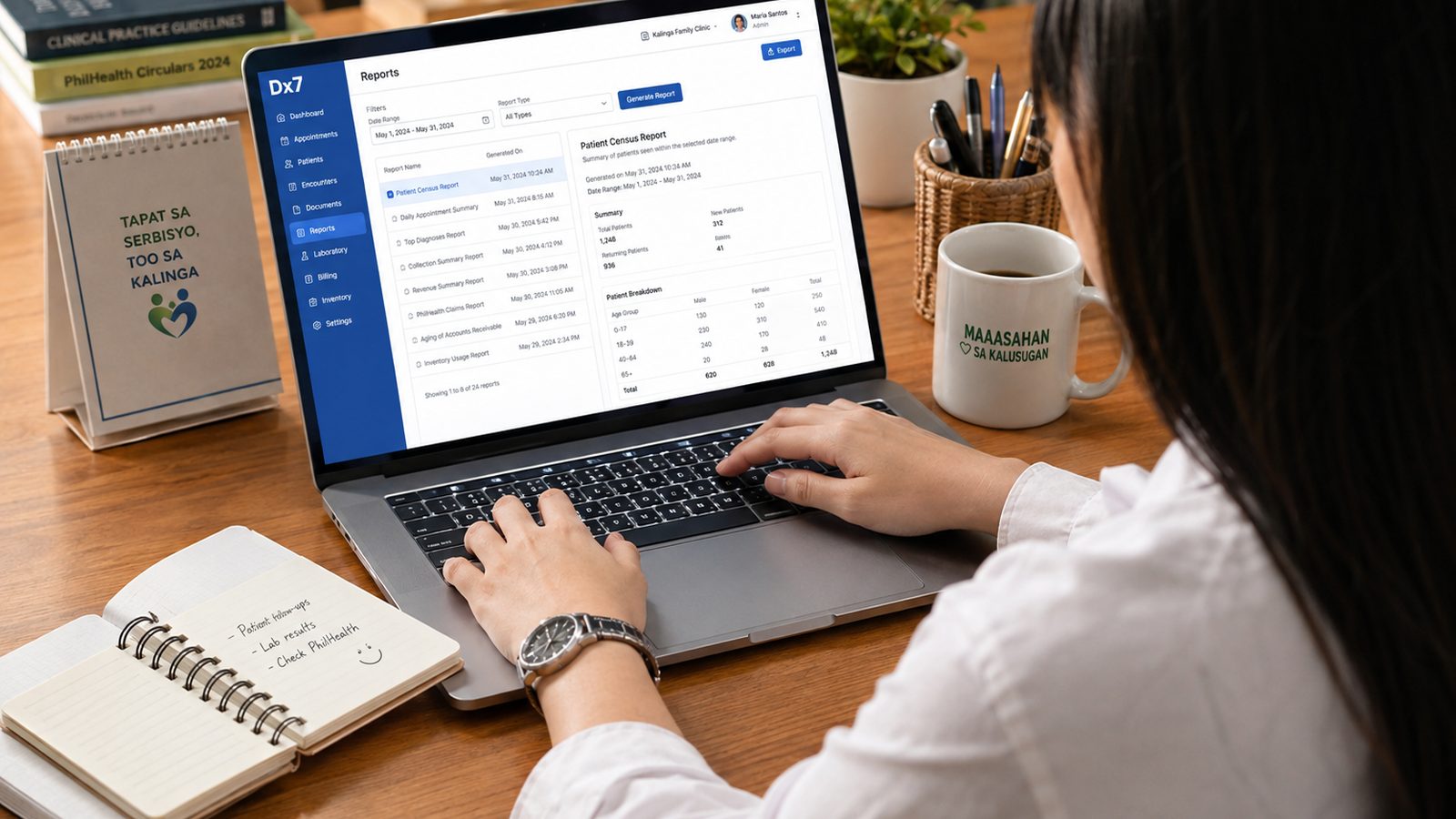
Current and historical released laboratory results can be reviewed together instead of being reconstructed from printouts, email attachments, downloaded files and chat messages.
Head Nurses receive a clearer working history. Nephrologists receive better access to source-visible information for qualified professional review.
- Review current released results
- Review historical released results
- Follow results across recurring care
- Preserve the issuing laboratory as the source
- Keep corrections and versions visible
- Provide role-appropriate access
The foundation beneath the workflow
Dx7 operates from a connected collection of information.
Dx7 is not merely a set of screens. Its visible functions depend on a shared foundation that connects the patient, clinic, laboratory result, user and accountable action.
- Authenticated users
- Separate clinic and tenant environments
- Patient identity within the workflow
- Role-appropriate permissions
- Secure storage
- Laboratory source history
- Corrections and versions
- Attributable actions
- Audit evidence

LX7 Laboratory Exchange · Operating within Dx7
One result. One source.

The current Dx7 deployment already receives released laboratory results from the connected Laboratory Information System.
LX7 carries the released result into the authorized Dx7 workflow while preserving the laboratory source and result history.
The laboratory continues using the system responsible for producing, verifying, authorizing and releasing the result. Dx7 makes that released information available where the Head Nurse and Nephrologist already manage recurring care.
Broader laboratory connectivity can extend this working exchange pattern to additional LIS environments through validated mappings and governed connections.
Clear responsibility
The right information for the authorized role.
Dx7 does not give every participant unrestricted access to every patient or organization.
A Head Nurse, Nephrologist, laboratory user, administrator and support user operate within different responsibilities.
Access remains:
- Limited to the approved organization
- Appropriate to the user’s role
- Connected to a legitimate workflow
- Attributable to the responsible account
- Governed by the purpose for which access was granted
Actual Dx7 interface
Dx7 in operation.
The screens below are captures of the deployed Dx7 application, taken on 11 August 2026. They are not mock-ups or reconstructions. Patient names, identifiers, laboratory accession and message numbers, dates of birth and staff details have been masked. Everything else is the interface as it runs.
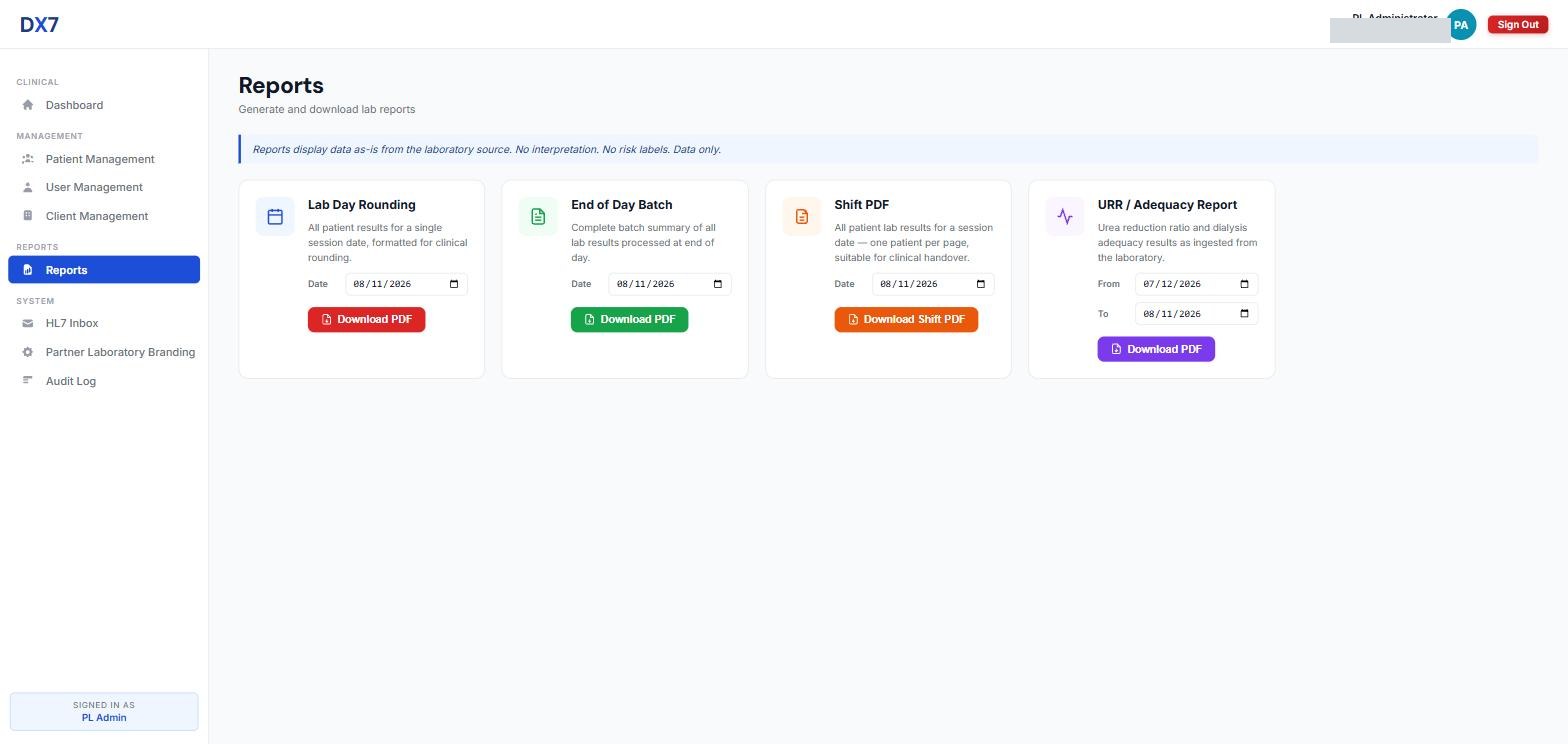
Reports
The Reports screen. It offers Lab Day Rounding, End of Day Batch, Shift PDF and a URR / Adequacy report, each generated for a chosen date. The notice on this screen is the product’s own: results are displayed as received from the laboratory, without interpretation or risk labels.
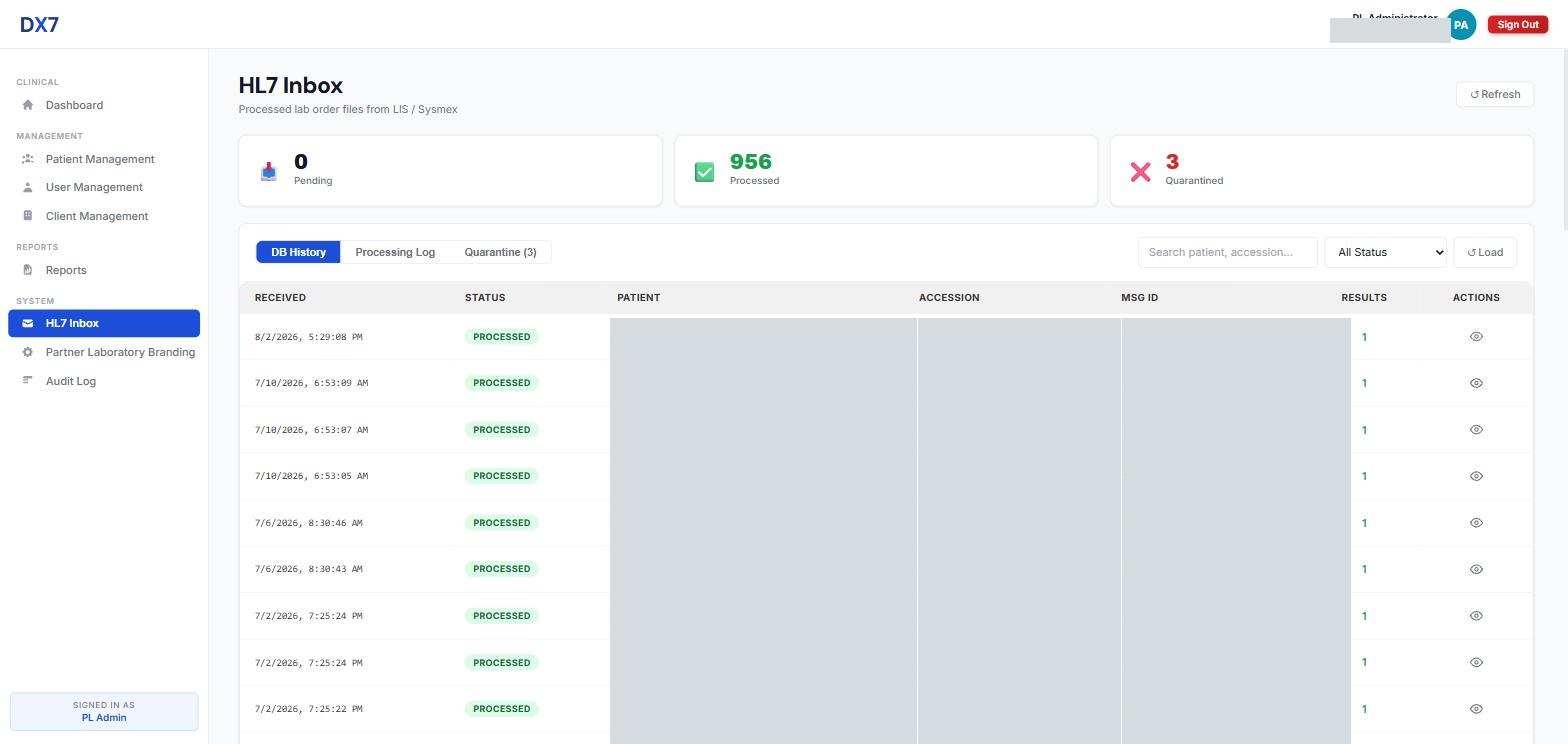
Laboratory message intake
The HL7 Inbox. Laboratory messages arriving from the connected Laboratory Information System are listed with their processing status, and unmatched messages are held in a quarantine queue rather than guessed. The patient, accession and message columns are masked here.
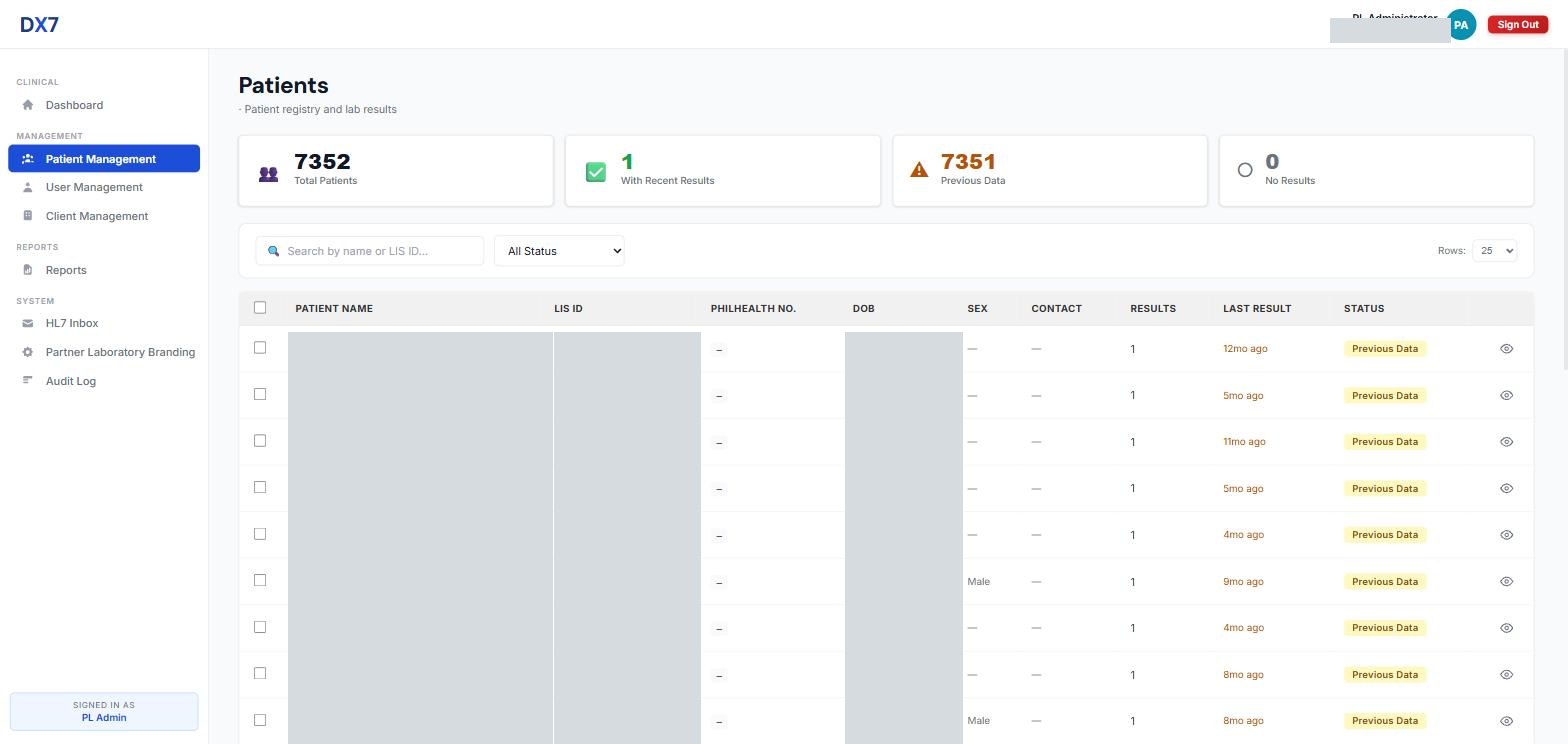
Patient registry
The patient registry, which records each patient together with their laboratory results and the date of the most recent result. The name, laboratory identifier and date-of-birth columns are masked.
These captures were taken from a platform-administrator account. The Shifts and Lab Days screens belong to the Head Nurse role and are not visible from that account, so no capture of them is published here. They will be added when a capture from the nursing role is available.
Each caption describes only what its screen shows.
Clinical authority
Dx7 prepares information. Qualified professionals make decisions.
Dx7 does not diagnose, prescribe, recommend treatment or replace professional judgment.
It organizes schedules, laboratory activity, released results and patient history so the people responsible for care can work from clearer information.
The Nephrologist determines what the information means and what action, if any, is appropriate.
Every useful Dx7 workflow strengthens the capabilities SantéXA needs across care:
- Continuing patient identity
- Authorized access
- Information provenance
- Corrections and versions
- Audit history
- Interoperability
- Governed modular extension
Dx7 begins with recurring dialysis care. SantéXA carries the same patient-centered foundation toward a broader authorized healthcare journey.
See Dx7 inside a real dialysis workflow.
See how Shifts, Lab Days, Reports and connected laboratory results work together around recurring care.